
Growing notes
Sales are paused pending verified shared inventory controls. Allow space for a large mature tree. Seed-grown plants are not sexed; only female trees produce pods.
Seeds
Gymnocladus dioicus
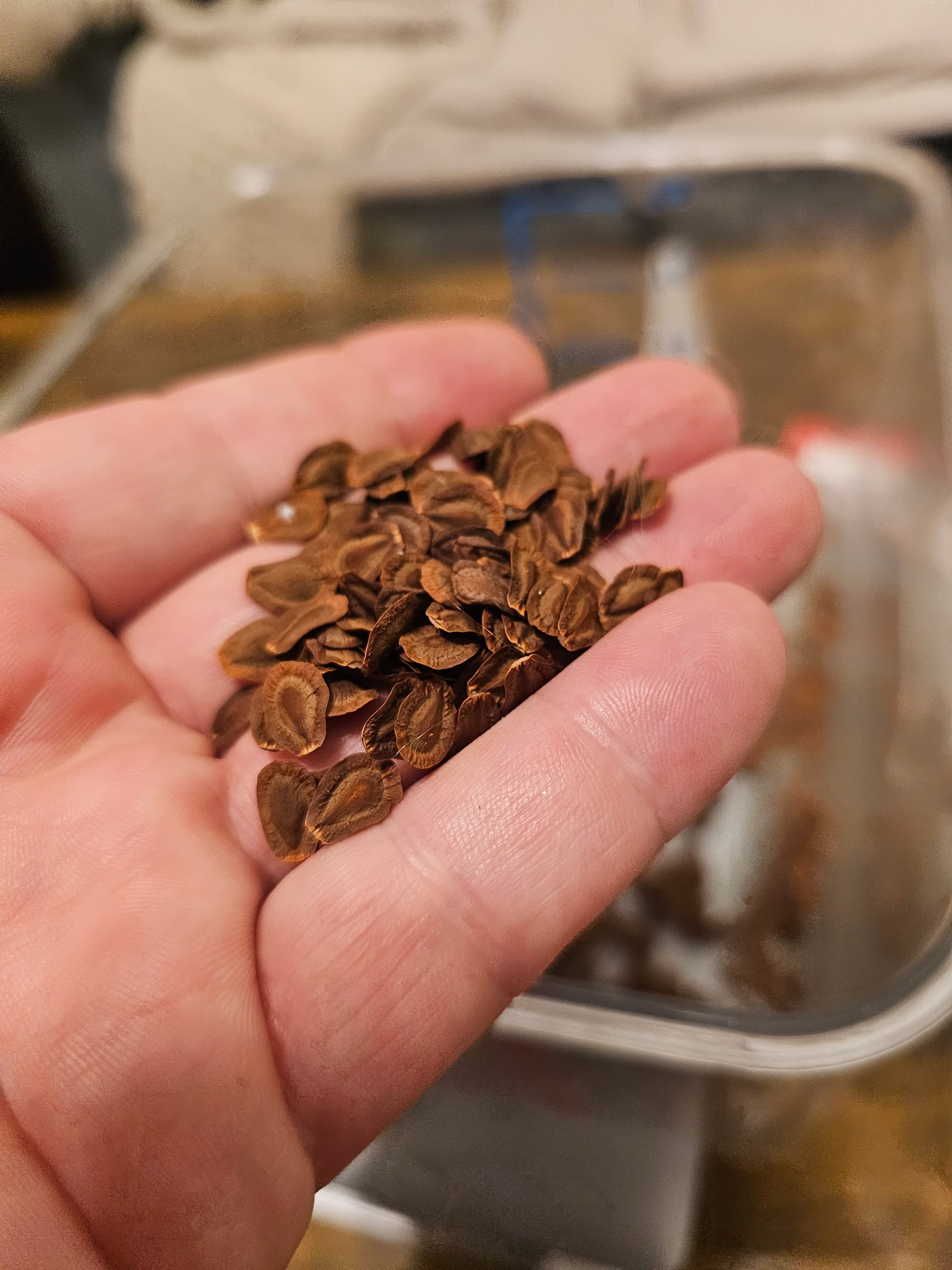
Kentucky Coffeetree seeds (Gymnocladus dioicus), packaged by Base Camp North in Pennsylvania. Choose 10 or 50 seeds for planting. Not for consumption. GROW ONE OF NORTH AMERICA'S MOST DISTINCTIVE NATIVE TREES Kentucky Coffeetree is a North American native shade tree known for enormous compound leaves, bold branching, and unusual dark brown seed pods. Its rugged winter silhouette and tropical-looking summer foliage suit larger yards, farms, homesteads, and native landscapes. Mature female trees may produce thick woody pods containing large, hard-coated seeds. WHY GROW KENTUCKY COFFEETREE? • Native to portions of central and eastern North America • Large compound leaves and bold branches provide seasonal interest • Adaptable to a variety of landscape conditions • Established trees can tolerate periods of drought • Adds diversity and habitat structure to native landscapes • An interesting species for collectors and homesteaders ABOUT YOUR SEEDS Choose 10 seeds for $5.99 or 50 seeds for $19.99. Seeds are packaged for planting and propagation. These are Kentucky Coffeetree seeds, not edible coffee beans. No specific germination percentage or tested germination is claimed. HOW TO GROW KENTUCKY COFFEETREE The seed coat is very hard. Scarification is generally needed to allow moisture to enter. 1. Carefully nick or abrade a small portion of the coat without damaging the embryo. 2. Soak scarified seeds in room-temperature water for approximately 12–24 hours. 3. Plant approximately 1 inch deep in a well-draining growing medium. 4. Keep the growing medium consistently moist, not waterlogged. 5. Provide warm growing conditions and monitor for germination. Germination varies with seed condition, scarification technique, temperature, and moisture. No specific germination percentage is guaranteed. GROWING INFORMATION Botanical name: Gymnocladus dioicus Common name: Kentucky Coffeetree Plant type: Deciduous native tree Mature height: Commonly 60–75 feet Sunlight: Full sun preferred Hardiness: Generally USDA Zones 3–8 Soil: Adaptable to various well-drained soils Growth rate: Slow to moderate Allow adequate space for a large mature tree. Kentucky Coffeetree typically has separate male and female trees; only mature female trees produce seed pods. IMPORTANT SAFETY INFORMATION Kentucky Coffeetree seeds and other plant parts contain potentially toxic compounds. Seeds are sold strictly for planting, not for consumption or beverage preparation. Keep away from children and pets. BASE CAMP NORTH Base Camp North is a nursery in Effort, Pennsylvania, focused on native trees, homesteads, and growing trees from seed. FREE MILKWEED SEED BONUS Free pack of 25 Milkweed Seeds with every purchase, while supplies last. AVAILABILITY Sales are paused pending verification of shared inventory controls across Etsy and BCN.
Small-batch seed lots are gathered, cleaned, processed, and packed by Josh at Base Camp North with help from a few friends in Pennsylvania.
10 seeds
SKU BCN-KCT-10-2026
$5.99
Sold out
50 seeds
SKU BCN-KCT-50-2026
$19.99
Sold out
SKU BCN-KCT-10-2026 · Sold out
$5.99
Sold out
Checkout runs through Stripe. Pickup and shipping options are checked before payment.
Hardiness
3–8
Sun
Full sun
Soil
Moist, well-drained soil; adaptable once established
Bloom or harvest season
Late spring to early summer
Mature height
60–75 ft
Spacing
40–55 ft
Native range
Native to central and eastern North America
Wildlife value
Provides structure and limited wildlife habitat; female trees produce persistent pods
Sales are paused pending verified shared inventory controls. Allow space for a large mature tree. Seed-grown plants are not sexed; only female trees produce pods.
Carefully nick or abrade the hard seed coat without damaging the embryo. Soak scarified seeds at room temperature for approximately 12–24 hours. Sow about 1 inch deep in well-drained medium, keep evenly moist without waterlogging, and provide warm growing conditions. Germination varies; no percentage is guaranteed.
Large seed item shipped in a padded package. Not for consumption.
Plants
Sambucus canadensis (also recognized as Sambucus nigra subsp. canadensis)
$15
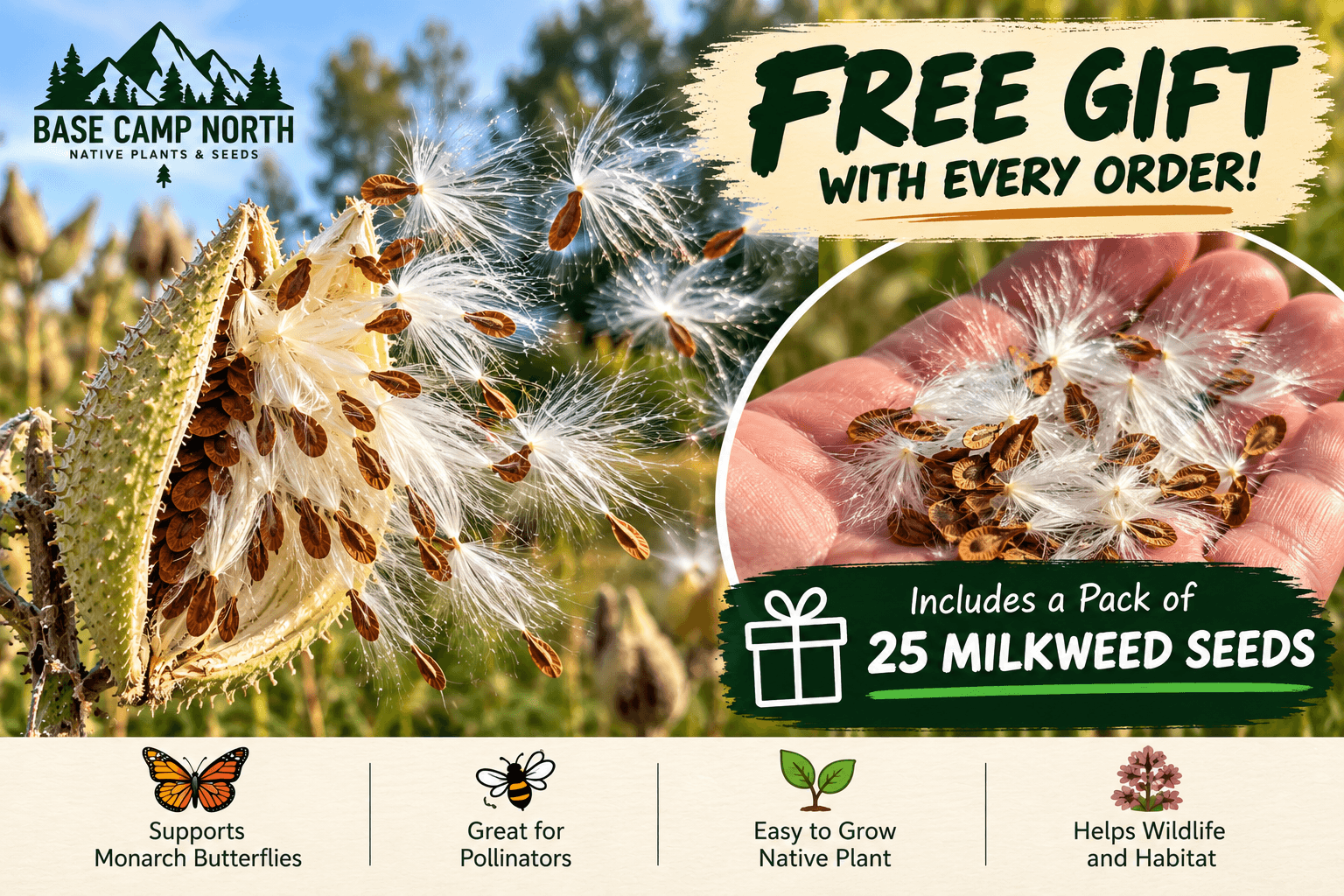
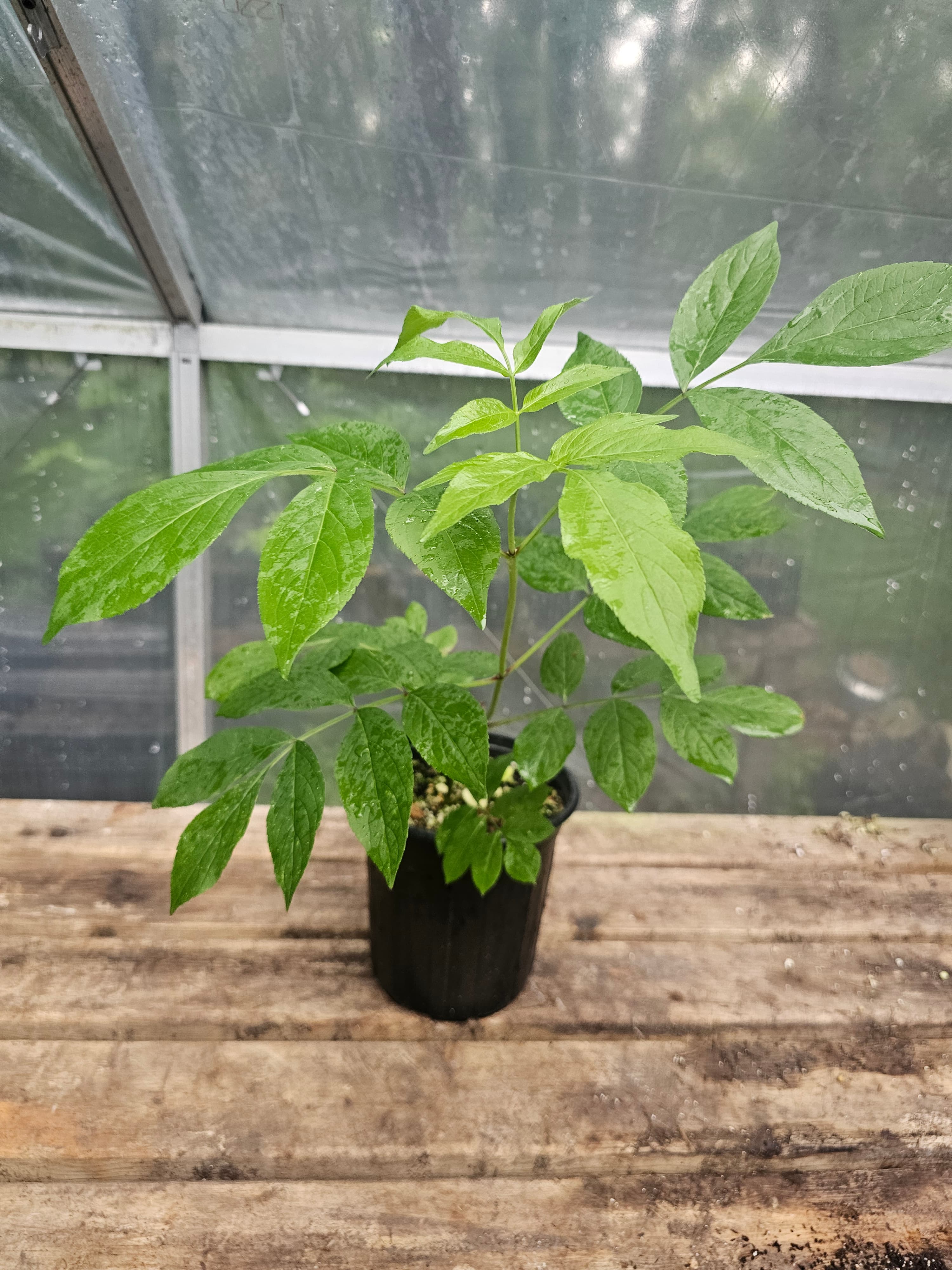
Grow one of North America’s most productive and wildlife-friendly native shrubs. American Elderberry (Sambucus canadensis) is a fast-growing native shrub valued for its large clusters of fragrant white flowers and abundant dark purple berries. It is an excellent choice for wildlife habitat, pollinator gardens, food forests, rain gardens, edible landscapes, and natural privacy screens. The flowers attract bees, butterflies, and other beneficial insects. The ripe berries are used in cooked recipes such as syrups, jams, jellies, pies, and wines. This listing is for one healthy, live American Elderberry plant grown by Base Camp North. Perfect for: Wildlife habitat Pollinator gardens Food forests Rain gardens Native landscaping Edible hedgerows Homesteads Privacy screens Important: Elderberry fruit should be fully ripe and cooked before consumption. Leaves, stems, roots, and unripe berries should not be eaten. 🎁 FREE MILKWEED SEEDS WITH EVERY ORDER! Every Base Camp North order includes a FREE packet of 25 Common Milkweed Seeds (Asclepias syriaca). Help support monarch butterflies, pollinators, and native wildlife habitat—one planting at a time. No code needed. Your free seeds will automatically be included with your order.
9 available
One Plant 12-24 inch Tall
Seeds
Asclepias syriaca
$5.99
Grow Common Milkweed (Asclepias syriaca), a native perennial wildflower and an important host plant for monarch butterfly caterpillars. Common Milkweed produces clusters of fragrant pink to mauve flowers that attract a variety of pollinators. Established plants spread through underground rhizomes and can develop into colonies, making the species particularly useful for larger native gardens, meadow plantings, pollinator habitat, and wildlife areas. Milkweed is an important component of monarch habitat because monarch caterpillars feed on milkweed plants. Seed Details: - Common Milkweed (Asclepias syriaca) - 2026 harvest - Cleaned and processed by Base Camp North - Untreated seeds - Seed-grown plants may naturally vary - Sold for propagation Growing Information: Common Milkweed seed generally benefits from cold, moist stratification before spring planting. Seeds can also be fall-sown outdoors where natural winter conditions provide stratification. Common Milkweed can spread once established and should be planted where its colony-forming growth habit is appropriate. No specific germination percentage is guaranteed. Seeds are sold for propagation and are not intended for consumption. 🎁 FREE MILKWEED SEEDS WITH EVERY ORDER! Every Base Camp North order includes a FREE packet of 25 Common Milkweed Seeds (Asclepias syriaca). Help support monarch butterflies, pollinators, and native wildlife habitat—one planting at a time. No code needed. Your free seeds will automatically be included with your order.
Gathered, processed, and packed by Base Camp North.
25 available
2 options
Seeds
$24.99
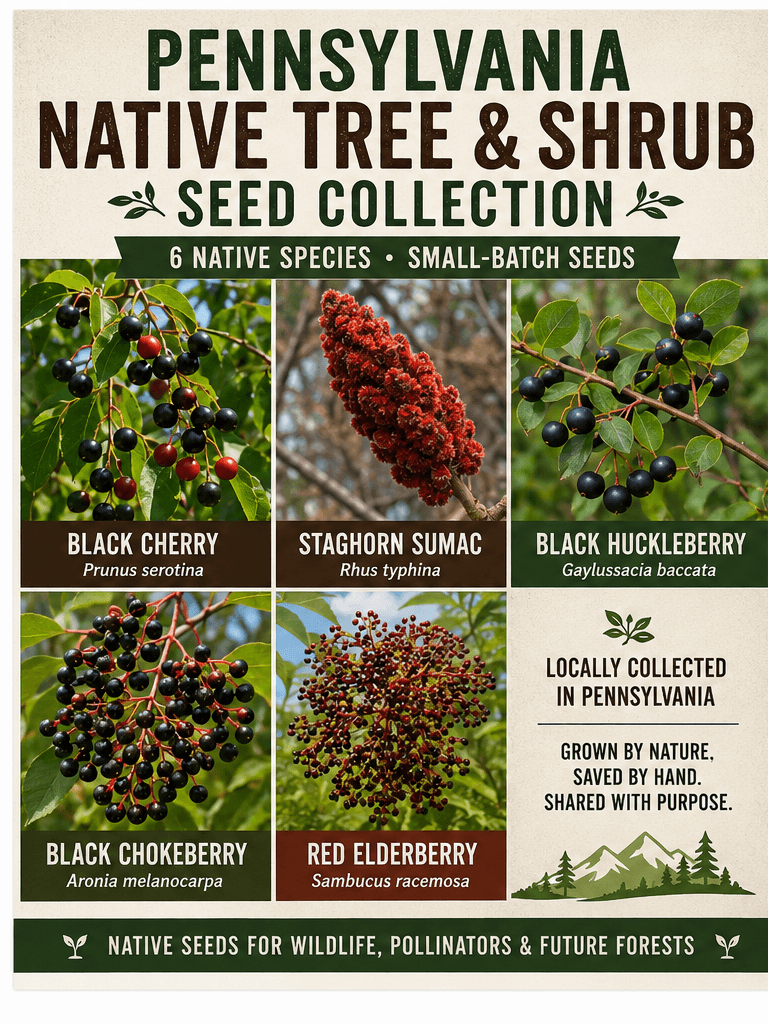
Start a diverse native planting with a curated collection of Pennsylvania native tree and shrub seeds selected for woodland edges, habitat restoration, naturalized landscapes, and backyard native gardens. This collection includes five individually packaged species, with approximately 25 seeds per packet and approximately 125 seeds total. Includes: Black Cherry (Prunus serotina) — 25 seeds Staghorn Sumac (Rhus typhina) — 25 seeds Black Huckleberry (Gaylussacia baccata) — 25 seeds Black Chokeberry (Aronia melanocarpa) — 25 seeds Red Elderberry (Sambucus racemosa) — 25 seeds Together, these species provide a mix of trees and shrubs that can add structure, fruit, cover, fall color, and ecological value to a planting. This collection is a good fit for native gardeners, landowners, habitat projects, woodland restoration, naturalized borders, and anyone who wants to establish a broader mix of native woody plants from seed. Each species comes in its own labeled packet. The seeds are not mixed together, so you can sow each species according to its individual germination requirements. Woody native seeds often require cold stratification or other pretreatment. Germination times vary by species and may be irregular. Growing native trees and shrubs from seed is a longer-term project, but it can be an economical way to establish larger numbers of plants. 🎁 FREE MILKWEED SEEDS WITH EVERY ORDER! Every Base Camp North order includes a FREE packet of 25 Common Milkweed Seeds (Asclepias syriaca). Help support monarch butterflies, pollinators, and native wildlife habitat—one planting at a time. No code needed. Your free seeds will automatically be included with your order.
Gathered, processed, and packed by Base Camp North.
6 available
Bundle
One (1) Pennsylvania Native Tree & Shrub Seed Collection - 5 Species / 125 Seeds